
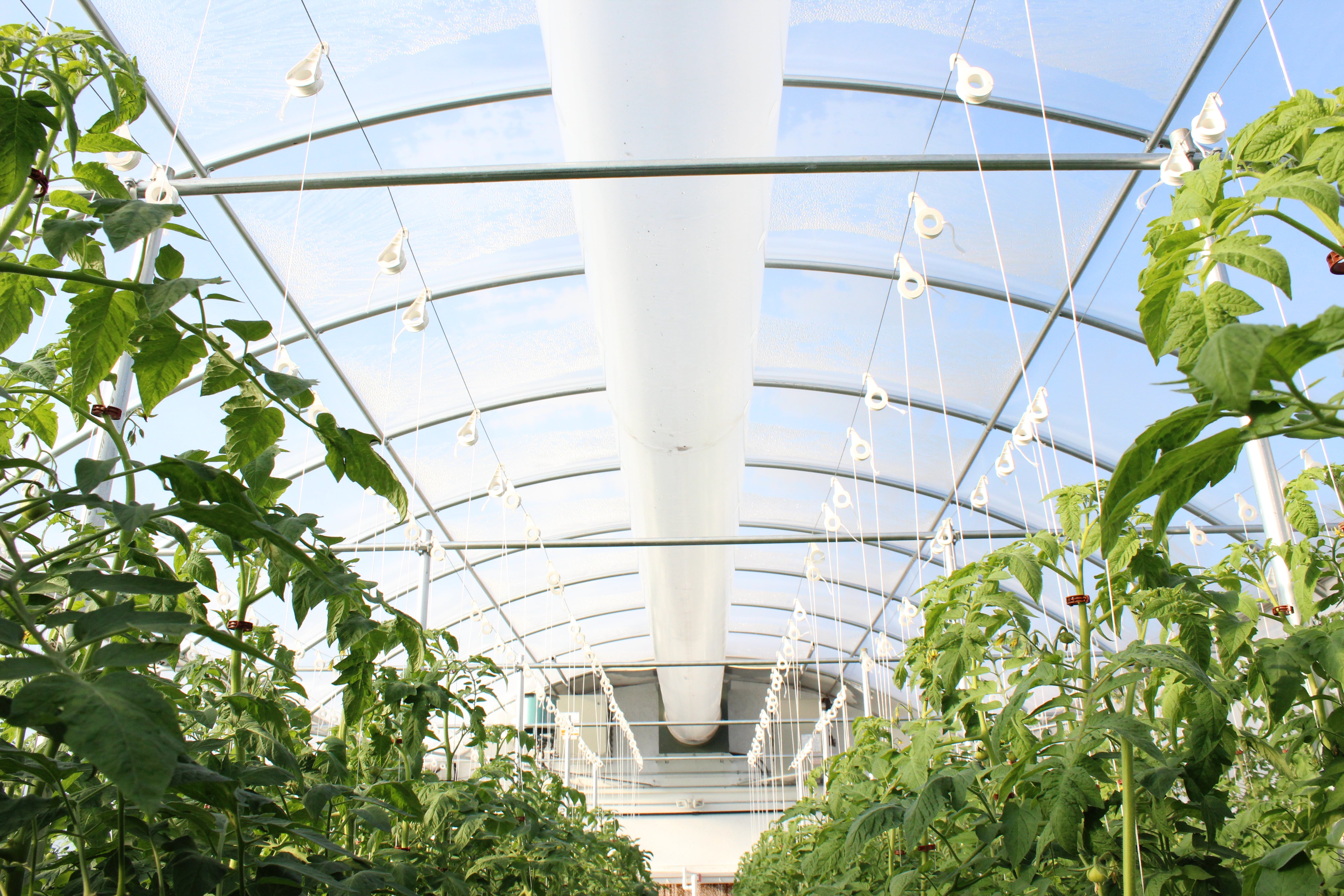
For many growers, the journey into controlled environment agriculture (CEA) starts small. For CJ Little of Calavera Farms LLC, it began with just a handful of systems and grew into something much bigger.
Today, CJ operates a greenhouse in rural Kentucky, producing fresh, hydroponic vegetables year-round. But her path to greenhouse growing spans classrooms, remote islands, and a deep passion for high-quality, locally grown food.
From the Classroom to 9,000 Square Feet of Greenhouse Production
Before launching her own operation, CJ was an agriculture and horticulture teacher working with an Atlas Greenhouse education facility. There, she introduced students to different types of hydroponic systems.
That early exposure sparked something bigger.
After retiring from teaching, CJ took her skills to one of the most unique growing environments in the world—Ascension Island—where she managed large-scale CEA production supplying fresh produce to a U.S. Air Force dining facility.
“In short,” she explains, “I went from four Dutch buckets and two Kratky rafts to over 9,000 square feet of CropKing greenhouses.”
That experience gave her both the confidence and hands-on knowledge to eventually start her own farm back in the United States.
Why Calavera Farms?
After returning to Kentucky, CJ knew she wasn’t done with greenhouse growing.
“My experience operating the greenhouses on Ascension was the best job I’ve ever had,” she says. “I didn’t want to stop there.”
She purchased a 30-acre farm and began researching greenhouse systems, ultimately choosing CropKing based on her previous experience.
The name Calavera Farms often sparks curiosity. “Calavera” is the Spanish word for “skull,” inspired by Día de los Muertos. Rather than something morbid, it represents a celebration of life, a philosophy that aligns closely with CJ’s passion for growing fresh, vibrant food.
A Greenhouse Designed for Efficiency

Inside, she operates two systems side by side:
- Nutrient Film Technique (NFT) for leafy greens and herbs
- Bato bucket systems for vine crops like tomatoes and cucumbers
With space for over 600 heads of lettuce and herbs and more than 150 fruiting plants, the greenhouse allows her to grow year-round in a controlled, clean environment.
“I like working in an environment that I control, as opposed to one that controls me,” she says. “And I can grow 12 months a year instead of six.”
Letting the Market Lead the Way
CJ's top performers include:
- Cucumbers (her #1 seller)
- Romaine and Salad Bowl lettuce
- Cherry and slicing tomatoes
Biggest lessons:
- Herbs are a tougher sell fresh, many customers prefer dried versions
- Unique or “non-traditional” lettuce varieties don’t always resonate locally
- Some crops simply aren’t worth the space if demand isn’t there
“I can’t grow cucumbers fast enough,” she says. “And Romaine consistently sells out.”
Her willingness to adapt, scaling back low-demand crops and doubling down on best-sellers, has been key to finding her niche.
Growing for Joy—and Community
While many operations focus heavily on scaling and profitability, CJ takes a more personal approach.
For her, success isn’t just measured in revenue—it’s about quality, connection and consistency.
“Walking into my greenhouse and seeing everything thriving—that’s the best part,” she says. “And hearing customers come back and rave about the produce makes it even better.”
Her greenhouse also fills an important gap in her community, especially for those who no longer garden themselves but still want access to fresh, local food.
Advice for New Growers: Be Ready for the Reality
 CJ is candid about the challenges of starting a greenhouse operation.
“This is not a plug-and-play system,” she says. “The greenhouse doesn’t run itself.”
From equipment issues and climate control to pests and nutrient management, the learning curve can be steep, especially in the first year.
Her advice?
- Prepare for challenges (and expect the unexpected)
- Understand business requirements before you start growing
- Be ready to commit time, energy, and resources
- Gain hands-on experience whenever possible
“Starting a hydroponic greenhouse business is not for the faint of heart,” she says. “But it’s absolutely worth it.”
Looking Ahead
As CJ continues refining her crop mix and growing methods, her focus remains steady: produce high-quality food her community values and keep improving with every season.
At its core, Calavera Farms is a reflection of her journey—built on experience, resilience and a genuine love for growing.
And for those considering a similar path, her story is proof that with the right mindset and dedication, it’s possible to turn passion into something truly meaningful.